
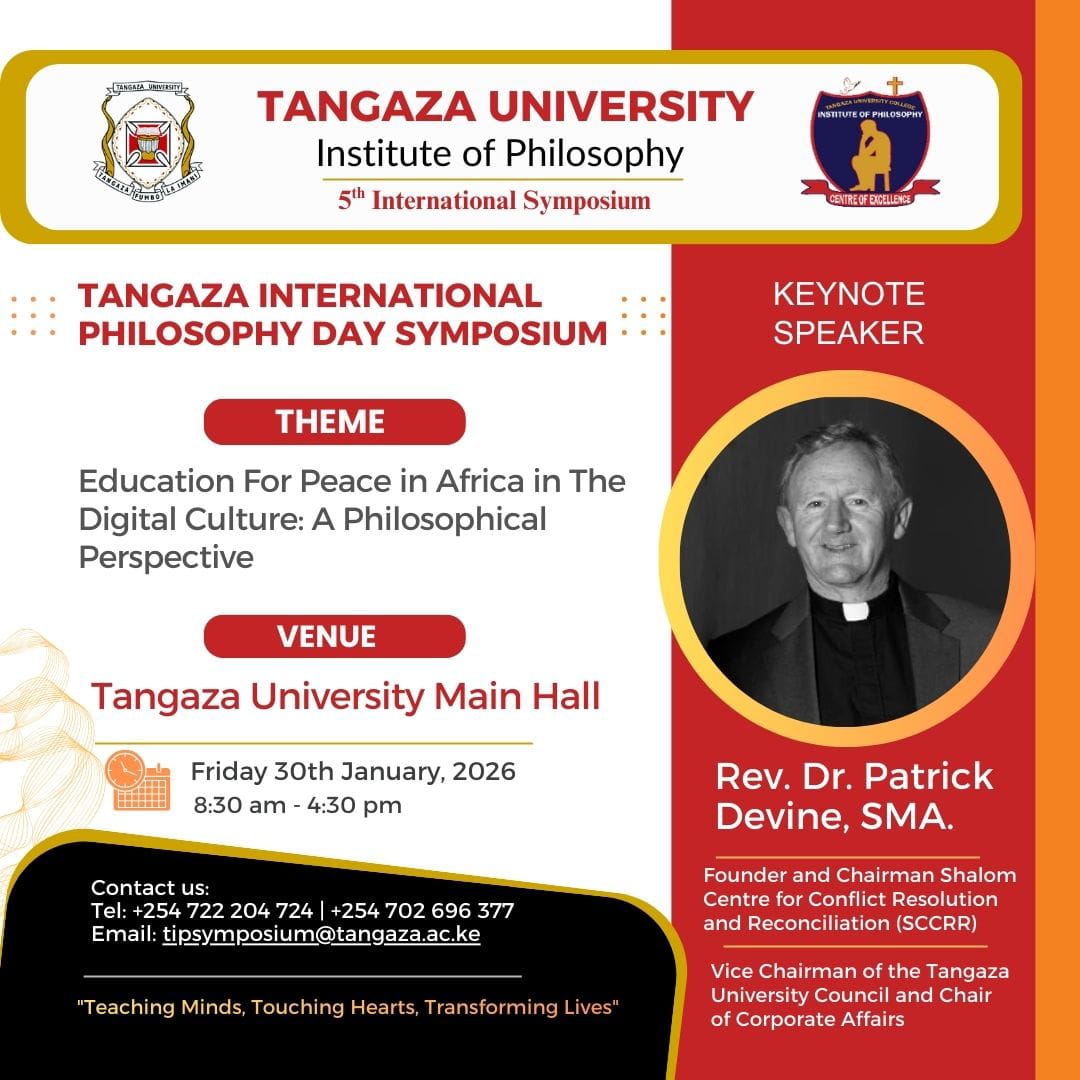
Theme: Education for Peace in Africa in the Digital Culture: A Philosophical Perspective
The 21st-century digital landscape has radically reshaped how knowledge is produced, distributed, and consumed across Africa. While digital culture offers new opportunities for access, innovation, and intercultural exchange, it also introduces ethical challenges including cyber-violence, misinformation, polarization, and socio-economic exclusion. In this context, education for peace becomes not only a pedagogical concern but a deeply philosophical one: What kind of human being should digital learning cultivate? Which values, virtues, and forms of rationality support harmony in technologically mediated societies? How can African philosophical traditions and indigenous knowledge systems enrich peace education for a digital age? The next Tangaza International Philosophy Day Symposium event seeks to develop forward-looking philosophies of education that empower African learners to become agents of peace, and responsible digital citizens in an inclusive technological culture. The organizers therefore invite original abstracts and papers that critically engage with such philosophical questions of peace-oriented education in Africa’s digital era. Interdisciplinary contributions are welcome, including philosophy, education, technology studies, communication, sociology, religious studies, and African studies.
Symposium Date: 30/01/2026
Venue / Format: Tangaza University / Hybrid
Organizers: Tangaza Institute of Philosophy
Some Relevant Sub-Themes:
- The meaning of peace in African philosophy: Ubuntu, community, and digital humanism
- Ethical implications of digital technology for education and moral development
- Digital citizenship, civic responsibility, and non-violent communication
- Governance, democracy, elections, and post-election violence.
- Misinformation, cyberbullying, radicalization, and hate speech: Educational responses
- Indigenous knowledge systems and peace pedagogy in online learning environments
- Digital divide, inequality, and the philosophy of justice
- Technology, democracy, and civic peacebuilding among African youth
- Gender, digital access, and peace education
- AI, virtual reality, and gamification for peace and empathy learning
- Philosophical models of personhood and the moral aims of education in the digital age
- Digital Culture, Human Identity, and the Formation of Conscience
- African Indigenous Wisdom and Peace-Building in Digital Learning
- The Role of Philosophy in Shaping Ethical Digital Policies
- Philosophical Foundations of Peace Education in a Digital Age
Submission Guidelines:
- Abstract length: 200–300 words
- Format: Times New Roman 12, double-spaced, APA 7th edition (or preferred format of the host)
- Submission deadline: Jan. 10th 2026.
- Email Contact: Abstracts and papers should be submitted as a Word document to: tipsymposium@tangaza.ac.ke
Publication Opportunity:
Selected papers will be considered for publication in a peer-reviewed edited volume of Tangaza University.
Keynote Speaker’s Bio
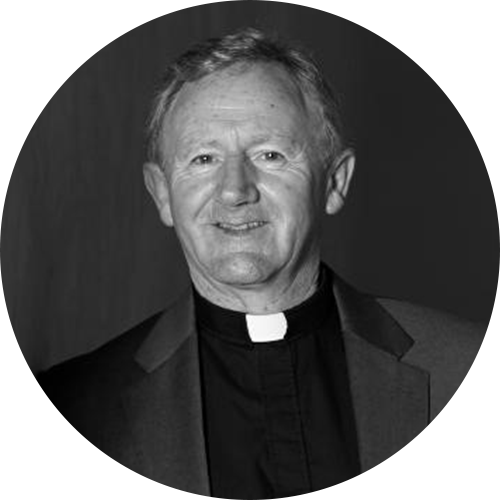
Rev. Dr. Patrick Devine, is a member of the Society of African Missions (SMA), serving as the Regional Superior for Kenya and Tanzania (1995-2007). He was Chairman for the Religious Superiors Conference of Kenya (RSCK), make up of 75 Religious Orders, for two terms and 3 years as Secretary General. He holds a Doctorate in Political Science and Public Administration, a Master’s Degree in Peace Studies and International Relations, and is Certified in Corporate Governance covering concepts, principles and functions.
For three decades, he has contributed immensely to the governance, leadership, and development of Tangaza University in Kenya. He also taught at Tangaza for 12 years. Presently, he is the Vice-Chairman of the University Council and Chairman of Corporate Affairs. In 2009, he founded the Shalom Center for Conflict Resolution and Reconciliation (SCCRR), an international organization with its headquarters in Kenya. Shalom-SCCRR has its sustainable peace and development intervention tentacles spread throughout more than 35 conflict environments in eastern Africa (www.shalomconflictcenter.org).
With these qualifications and almost 40 years of experience in Africa, attending to issues of religious and social values, manifest and structural violence, religious ideological extremism, violence against women and children, underdevelopment, and deficits in public administration, he is recognized as one of the foremost authoritative voices on conflict resolution and reconciliation on the continent. In 2013, he was honored with the International Caring Award, succeeding the Dalai Lama, and has since received numerous other local and international accolades, including an IGAD (Intergovernmental Authority on Development) for his contribution to justice, peace, environmental, and development interventions. He is a frequent speaker and guest lecturer at conferences and universities around the world, including DePaul, Chicago, Harvard Law School, Kennedy School of Government, Fordham (NY), Queens (UK), and Maynooth (Ireland), among numerous others. He has published numerous rigorously researched articles and books. In the past year and a half, he has published books on the ‘Persistent Conflict between the Pokot and Turkana: Causes and Policy Implications’ and the ‘Ilemi Triangle Environs; Delineating the Causes and Consequences of Tukana-Dassenach Conflict’. Last year, his article on ‘Conflict and Religion in Eastern Africa; A Conceptual Consideration of Radicalization, Fundamentalism, Extremism, Terrorism, Tolerance and their Interaction Dynamics’ was published in the Tangaza Journal of Theology & Mission and has since received global attention through various media outlets.