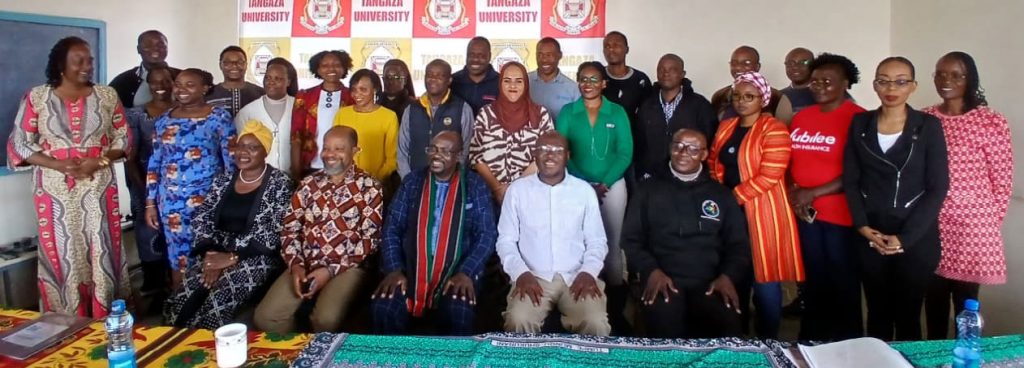

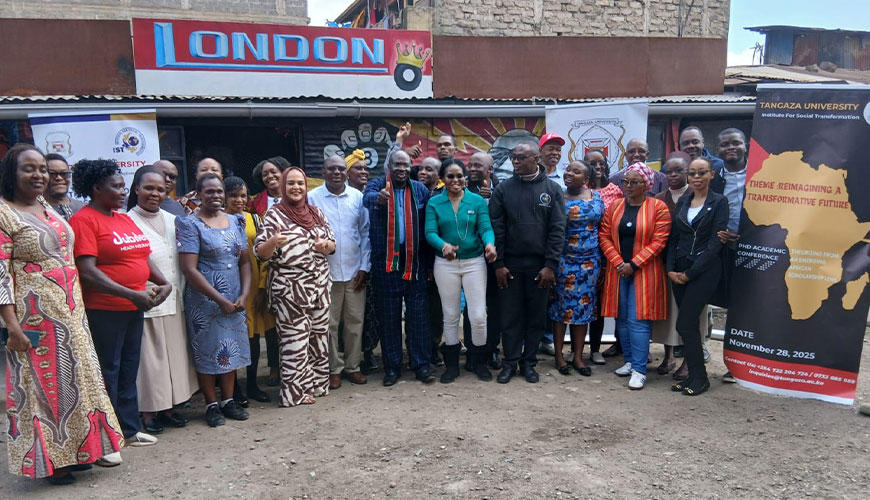
The recent two-day immersive conference for PhD students at the Institute of Social Transformation offered a compelling re-imagining of what transformative education can become when teaching, learning, and assessment are intentionally grounded in lived realities. What took place was far more than an end-of-semester examination. Instead, the conference evolved into an active educational laboratory—an environment that challenged us to rethink how knowledge is produced, shared, evaluated, and embodied. The very form and space of assessment became part of the learning process, marking a decisive shift away from conventional models and opening pathways for a more reflective, engaged, and context-sensitive approach to education.
Organized as a student-led examination, the two-day event demonstrated how assessment can be re-envisioned when learners take responsibility for shaping the process. Each student assumed an active role, transforming learning into an enacted and participatory experience. This was the first time such a forum had been organized at University Mtaani—symbolizing not only innovation, but also a decolonized way of thinking about examinations. Conducting the assessment in a non-traditional setting, outside the polished environments typical of formal universities, exposed us to the lived realities of communities often marginalized in mainstream education. Experiencing this context became a form of learning in itself: a reminder that inclusive education must be grounded in the realities of those most at risk of being excluded.
Many of us felt the kind of constructive anger that Paulo Freire describes within liberative education—an anger that awakens consciousness and motivates action. Students expressed deep appreciation for the opportunity to encounter real-world struggles and to rethink their role as future scholars and practitioners.
The Purpose of Education: Setting the Intellectual Grounding
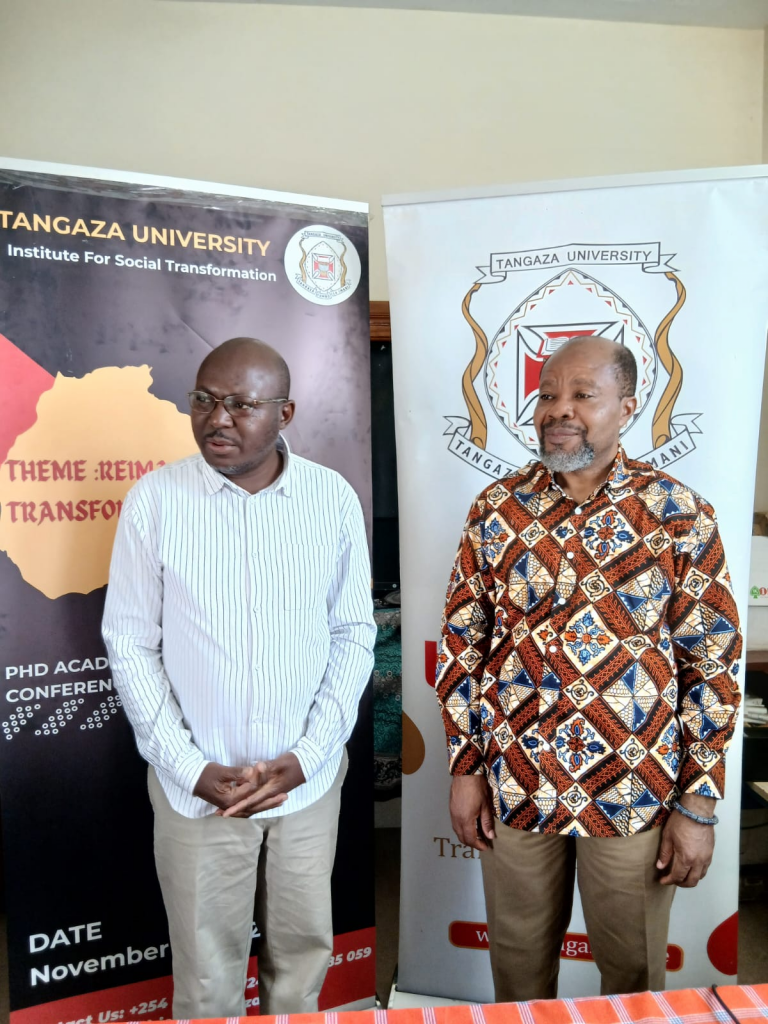
In his thoughtful opening remarks, Bro. Jonas posed a foundational question: What is education for? He argued that education must cultivate both skill and imagination, enabling learners to become innovators rather than passive consumers of knowledge. By framing the Institute for Social Transformation as a “knowledge hub,” he reminded us that learning is always shaped by environment and context.
His reflection on University Mtaani brought this point to life. As a satellite campus offering a diploma in civic education within informal settlements, the program breaks down traditional educational barriers by meeting learners where they are. Its service-learning model positions education as empowerment—bridging academic theory with the complex realities that communities face daily.
Learning Through Action: Rethinking Positionality and Possibility
Dr. Ouma Akoth extended this conversation by emphasizing the need to action our learning—to move theory beyond the classroom and into engagement with real social conditions. He praised leadership that encourages experimental learning spaces and called for increased sensitivity to what he described as “the dark side of modernity,” shaped by continuing colonial dynamics.
His reflections invited us to interrogate where we theorize from, how our positionality influences our understanding, and how humanistic possibilities emerge when we embrace creativity and contextual awareness. Within this framing, learning becomes a conscious act of locating oneself within social realities and imagining alternatives to the injustices encountered.
Knowledge, Power, and the Task of Decolonization
Our keynote speaker, Professor Kagwanja, Founding President and CEO of the Africa Policy Institute (API) and a leading expert on security, governance, and strategic issues, offered some of the conference’s most thought-provoking insights. He stressed the urgency of innovating not only in teaching methods but also in assessment practices, noting that universities remain deeply entangled with structures of power.
His critique exposed how Western epistemologies have shaped dominant narratives—leading to a world where “blackness and Africa are treated as synonymous,” often through reductive and disempowering lenses. He challenged us to examine who holds power, how it is wielded, and how the interplay between power and knowledge can create or dismantle oppressive systems. His assertion that “power without knowledge is blind, and knowledge without power is empty” captured one of the central dilemmas confronting African scholarship today.
In response, he called for a deliberate decolonization of the mind and the construction of an educational model that restores dignity, agency, and intellectual sovereignty. Knowledge, he insisted, must operate as a strategy for empowerment.
Innovative Assessment: Learning as Participation
Throughout the two days, students from multidisciplinary backgrounds presented their theoretical approaches in relation to their research areas, while the student from the rural-urban course , in particular, provided insightful presentations on different components of slum upgrading, showing how diverse academic disciplines can illuminate community-based challenges.
This interactive space allowed students to enrich one another’s work, creating a vibrant environment of intellectual exchange. The assessment was transformative: rather than being passive respondents to exam questions, students became active contributors to knowledge creation. By engaging directly with social issues, they integrated theory, practice, and personal reflection—demonstrating the depth of learning made possible when assessment mirrors complex real-world conditions.
Reimagining the Future of Teaching and Learning
A shared vision emerged across all presentations: the future of education must be reflective, relational, and transformative. Innovative assessment approaches deepen learning by positioning students as thinkers capable of interpreting their world, challenging oppressive structures, and imagining more just futures.
Ultimately, the conference affirmed that transformative change begins when we dare to rethink how we teach, how we assess, and how we understand knowledge itself. In doing so, we open space for a more empowering, dignifying, and contextually grounded educational future—one in which learning becomes a force for liberation and social transformation.