Mission
Refugees & Migrants in Our Common Home (OCH) is an international and long-term initiative led by Villanova University’s Mother Cabrini Institute on Immigration, along with a coalition of academic and community partners. The aim is to co-create and implement global Action Plans that serve as a guide for higher education institutions in responding to migrants and refugees through four main pillars: teaching, research, advocacy, and service with migrants and refugees.
The Our Common Home African Regional Group carries the OCH vision to this region, focusing the conversation on issues of education relating to migrants and refugees in Africa. It is crucial to address critical issues related to migration, displacement, colonization, and the environmental challenges posed by the climate crisis, with a particular emphasis on decolonization. Migration, whether internal or cross-border, serves as a survival strategy and a symbol of hope for millions.
This conference focuses on African perspectives to foster interdisciplinary dialogue about the structural drivers of displacement through a decolonial lens. We aim to elevate the voices of migrants and refugees while examining the responsibilities of communities, states, and global institutions in light of colonial legacies. By exploring themes of crisis and creativity, vulnerability and vision, we seek to identify pathways toward just and sustainable futures. We invite scholars, practitioners, policymakers, theologians, artists, refugees, migrants, and activists to engage with migration as a complex human, cultural, political, and spiritual issue.
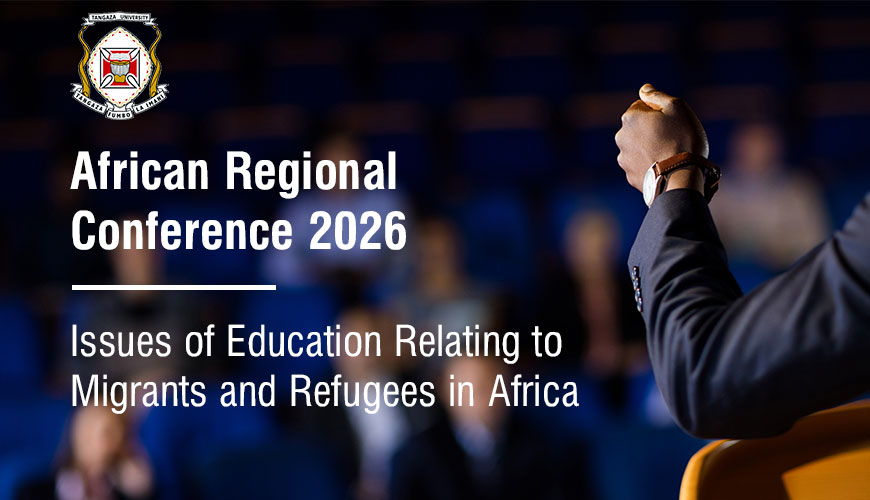
The African Regional Conference – June 29-30, 2026, at Tangaza University in Nairobi, Kenya – gathers migrants, refugees, universities, scholars, students, and community partners to explore the African perspective on this multi-year, multi-phase initiative. The reports, resources, and developing questions that will emerge from this regional conference will be presented at the next global OCH gathering in Rome in the fall of 2027, in order to further the conversation about regional needs as they relate to the global context.
Conference Overview
Structure
The conference will include different modalities for engagement. Through keynote addresses, lightning talks, and break-out working groups, a curated group of action-driven participants will collaborate in action-oriented discussions towards short- and long-term changes within the local educational systems. These discussions will result in forward-thinking reports that articulate a mission and vision, recommend action items, share best practices, and include a broad range of possible interventions that respond to the African context, and state clear milestones and deliverables. Please, note that this conference will be conducted in English.
Lightning Talks
Lightning Talks are short-form presentations designed to spark new conversations and collaborations. Unlike traditional conference presentations or lectures, each speaker has only 5-7 minutes to present a topic, with minimal slides. If using slides, presenters should limit themselves to no more than five and prioritize visuals over text. Many useful guides about Lightning Talks are available online; start with a Lightning Talk video about preparing a Lightning Talk.
Lightning Talks relating to any of the four pillars as well as any methodological perspective. These talks should highlight key issues or provide new perspectives on any of the challenges or developments regarding migrants and refugees in the African context.
Purpose of Lightning Talks
- Encourage fast-paced, engaging knowledge sharing.
- Provide an opportunity for many participants to present in a short period.
- Foster cross-disciplinary discussions and networking.
Working Groups
Working groups are where real collaboration and action planning take place.
Participants are assigned to a group based on the four key project pillars: teaching, research, advocacy, and service with migrants and refugees.
During this conference, working groups will meet to discuss the questions guided by the core pillars and focused on regional action that can both refine and respond to the Action
Deadlines and Application
Please be aware that the Kenyan government may require your country to obtain an entry Visa, which in some cases can take several weeks or months to receive it. Please plan early and check with your closest embassy to ensure you can attend the conference. Once accepted, you may request a formal letter of acceptance to submit with your visa application.
- Application Deadline for Lightning Talk presentations: April 30, 2026
- Deadline for general attendance: May 8, 2026
Applicants will be notified of selections by May 15, 2026.
If accepted, participants will receive a link to officially register. Lightning talk abstracts should be limited to 250–300 words, and presenters should include a brief biographical note of 100 words.
Exploring Engaging Topics and Interdisciplinary Areas
We especially encourage presentations that are action-oriented and recommendations in the fields connected with OCH’s four pillars of action: teaching, research, advocacy, and service with migrants and refugees. Here’s a glimpse of the areas we encourage you to explore and how they engage the four pillars.
Climate Migration, Displacement, and Justice:
- Climate Change and Forced Migration in Africa: Unpack the pressing realities of environmental degradation, desertification, flooding, and rising sea levels, all of which are powerful drivers of displacement and mobility across the continent.
- Indigenous Knowledge, Ecology, and Climate Resilience: Celebrate the wisdom of African cosmologies and traditional ecological practices that empower communities to thrive amid climate stress, fostering resilience through deep-rooted land ethics.
- Gender, Youth, and Climate Migration: Dive into the unique impacts of climate migration on women and young people, highlighting their agency, vulnerability, and leadership roles in these contexts.
Decolonization, displacement, and migration:
- Decolonization: A Pathway to Migration Solutions: Reflect on the enduring shadows of colonialism and how they shape the aspirations and experiences of African communities. Examine how these historical issues compel people to migrate in search of better prospects and a chance to reclaim their narratives.
- Justice, Ethics, and Global Responsibility: Confront the issues of historical accountability, extractivism, and neocolonialism in the broader conversation around displacement and justice.
- Food Insecurity, Water Scarcity, and Human Mobility: Explore the intricate relationships between agriculture, pastoralism, conflict, and migration in a world increasingly shaped by climate change and neocolonialism.
Migration, Culture, and Art:
- Migration, Identity, and Cultural Transformation: Investigate how migration mobility reshapes personal and communal identities, influencing belonging, memory, ritual, and societal cohesion.
- Narratives, Arts, and Storytelling in a Drying Land: Engage with literature, film, visual arts, and oral histories as powerful mediums for resistance, memory preservation, and visions for sustainable futures.
- Shifting the narrative on migration: Discover ways to use storytelling, culture, and art to share narratives about migration in and from Africa.
Religion, Spirituality, and Faith:
- Faith, Theology, and Ecological Hope in Africa: Discover how religious communities respond to the climate crisis, migration, and sustainability, weaving narratives of eco-theology and imaginative moral futures.
- Catholic Social Teaching: Discuss how Catholic Social Teaching can promote theologically-grounded ethical action with regard to migration.
- Synodality: Explore how Catholic synodality based on communal dialogue, deep listening, collective discernment, and reconciliation can help refugee and migrant communities.
Planning Committee
Ibrahim Khalif, Department of Refugee Services, Kenya
Luundo Dieumerci, Vijana community base Organization, Kenya
Fr. Peter Imaji O.S.A, Augustinian International House of Formation, Kenya
Fr. James Wambugu Mawngi O. S. A, Kenya
Marcelin Munga, Farming & Health Education (FHE), Kenya
Mapenzi Kaposho Akso, Kalobeyei Initiative for Better Life (KI4BLI), Kenya
Rachel Martha Siom, Amani Socio- Educational Centre, Kenya
Alembe Asukulu, Christian Family Church International, Kenya
Joseph Naquentera, Neverlate Network Africa (NGO), Ghana
Bartholomew Sey, Rural Farmer Care Initiative (RFCI), Ghana
Justin Paluku Mbunzule, Up With African (NGO), Uganda
Charity M. Mshelia, University of Jos, Nigeria
Blessing C. Chukwueze, Teens and Emerging Adult Foundation, Nigeria
Mr. Chris Nwadike, Centre for Carbon Literacy and Sustainability Education Initiative, Nigeria
Sr. Lilian Wayua, Tangaza University, Kenya
Samuel Fidelis Odidi, Villanova University, USA
Fr. John Abubakar O.S. A, Villanova University, USA
Lana Cook, MIT Systems Awareness Lab, USA
Michele Pistone, Villanova University, USA
Paola Pruett-Vergara, Villanova University, USA
Angela Lopez-Egea Vives, Villanova University, USA